
Who Runs Your Company?
Do you know what the cost is per hour to operate your equipment? Do you know what the cost is per hour if your equipment is idle? Do you know where your equipment is located? Most important, do you know where your equipment is scheduled to be tomorrow, the next day, or even next week? How about your people and material?
If you answered yes to the previous questions, stop reading and light up the best cigar money can buy. You are making more money than 90% of your competitors. But if you’re still here, guess who’s running your company? It isn’t you. It’s your foremen, your job managers, your dispatcher, maybe even your subcontractors. It’s whoever knows where your resources are.
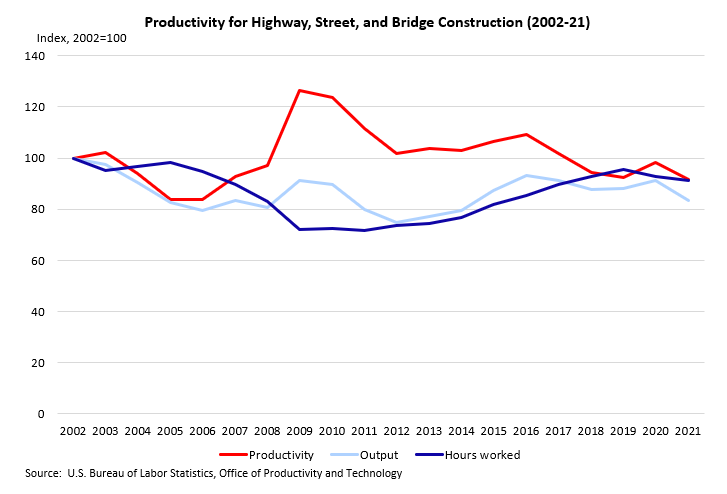
The days of dedicating resources to three or four large, profitable jobs are gone. Today’s environment requires companies to diversify their work across dozens of jobs, much like a stock portfolio. But complexity evolves exponentially: the techniques that are adequate for managing a few jobs will no longer do for ten jobs, let alone a hundred. Which is one reason overall construction productivity has remained essentially stagnant since the introduction of the steam shovel.
Every construction firm knows the value of great estimating. What they may not know is how to increase the profit from each job. In a typical scenario, a mere 5% increase in productivity across all activities will more than double your profit!
Profit and Productivity for a $1,000,000 Project
| Cost | % of Project | $ | Productivity Increase | Decrease in cost / increase in profit $ |
|---|---|---|---|---|
| Overhead | 10% | $100,000 | ||
| Material | 19% | $190,000 | ||
| Labor | 20% | $200,000 | 5% | $(10,000) |
| Equipment | 40% | $400,000 | 5% | $(20,000) |
| General Conditions | 8% | $80,000 | 5% | $(4,000) |
| Profit | 3% | $30,000 | 6.40% | $64,000 |
The key is to take control of your resources by scheduling them in advance. This means planning ahead what resources will be allocated to particular jobs at particular times. Moving a piece of equipment to a job and waiting until it is “called off” is not enough. Efficiencies are achieved only by reducing idle time, and that means moving the right resource to the right job at the right time.
But scheduling only works when there is one master schedule that is shared throughout the organization. Is all of the scheduling and dispatching information in one place? Is the information correct and up-to-date? Are changes easily made and easily shared? Do the stakeholders – not merely the owner and the dispatcher – know when they can expect the equipment, for how long, and where it is going next?
If you want to increase construction job productivity, the easiest way – really the only way – is through shared, comprehensive, real-time scheduling.