

Labor planning
See next year's shortage while there is time to fix it
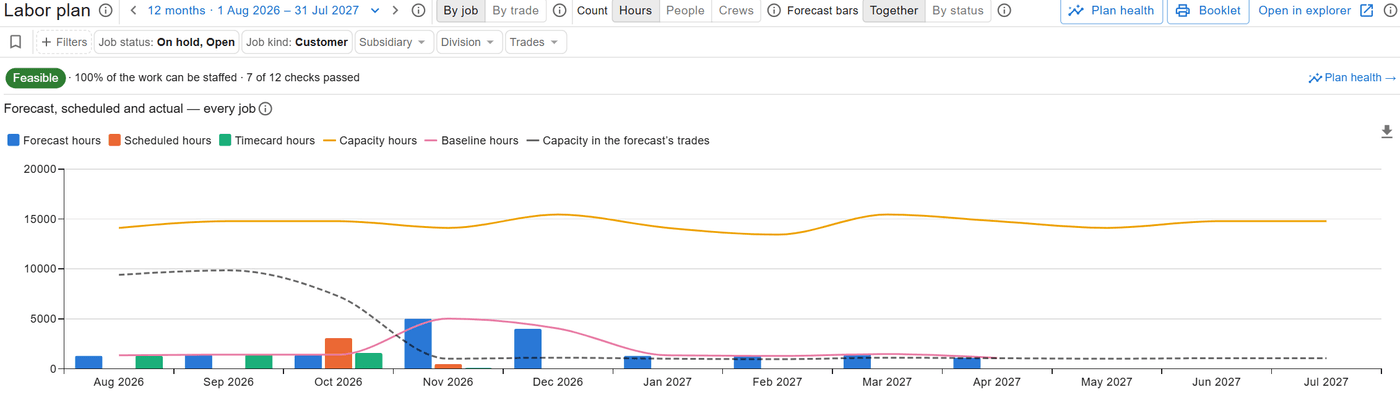
What you decide with it
Decisions you make with it, not after it

Whether the plan can be staffed
Plan health gives the share of forecast work you can staff, the worst week and the short trades. It splits the shortage into what timing fixes and what needs people.
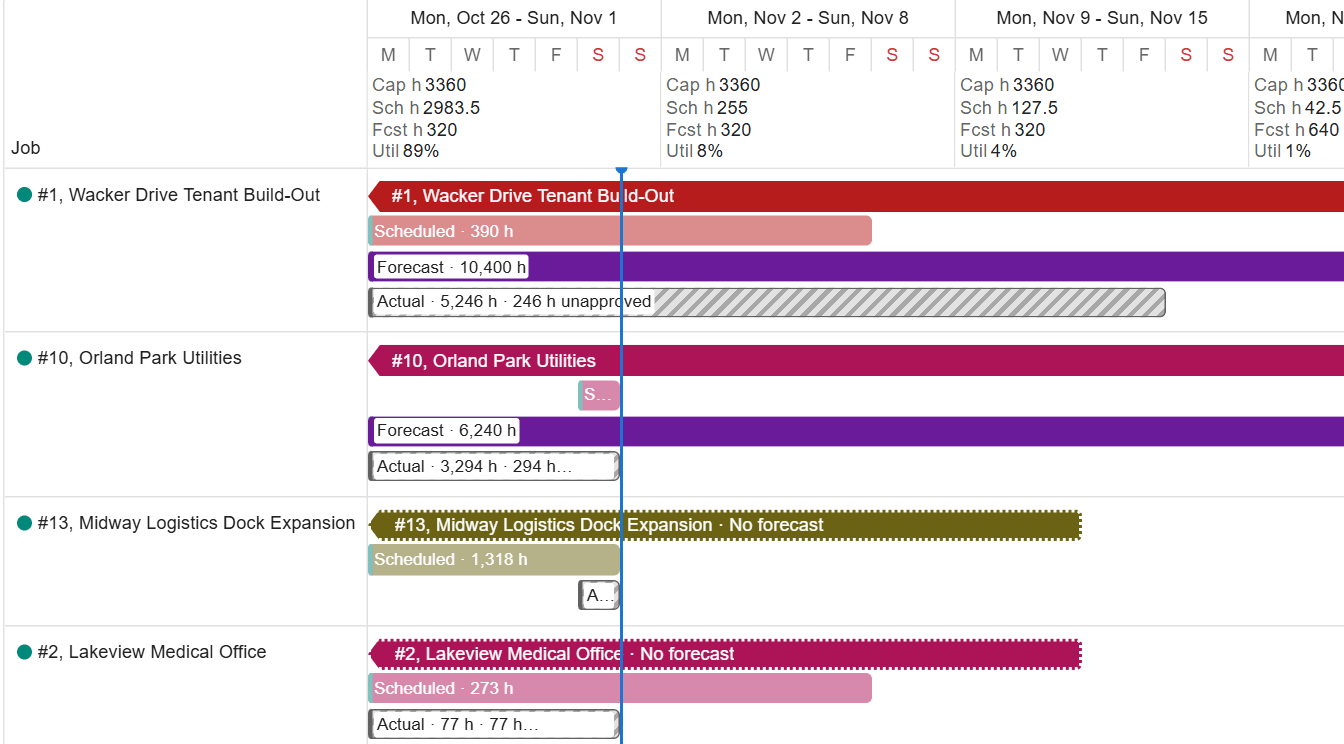
Which job to move instead of hiring
On the timeline, try job moves as drafts and watch capacity change before anything is saved. Keep the moves that work and drop the rest.
Whom to hire, and by when
A trade short for weeks on end raises a hire signal far enough out to act: how many people, and by when. People with no forecast work show as bench.
How it works
How it works
Forecast each job
Forecast hours spread over the job’s working days on a curve, by trade, cost code, crew or the job as one line. A closed period shows the actual hours with the plan beneath.
Track the job against its budget
Each job shows budget hours, actual to date, earned hours, percent complete, performance factor, hours to complete and projected final hours, with the variance.
Add up the company
The labor plan counts every job, weighting bids by how likely they are to happen, and sets forecast heads against the people you have, by job or by trade.
Decide and print
Plan health suggests job moves, hires, overtime and people to redeploy. Snapshots keep earlier forecasts, and the booklet prints the plan one section to a page.
Hours, not money
The labor forecast is in hours and heads, the units a superintendent plans in. The money forecast lives in job cost, as cost to complete and projected final cost. Both read the same schedule and the same time cards, so the two forecasts do not drift apart.
At a glance
Labor planning in ControlBoard®
| Platforms | Web |
|---|---|
| What it does | Forecast hours and heads per job, the company labor plan and plan health |
| Who uses it | Project managers, operations managers and owners |
| Works with | Budgets and needs from HCSS HeavyBid or an Excel bid; the schedule and time cards |
Updated
“Efficient, Intuitive, and Well-Supported—ControlBoard Delivers”
With ControlBoard, resources can be scheduled easily, and complex labor forecasts can be prepared, ensuring we run efficiently without hiccups or guessing.
 Tomas Z, VP of OperationsPihl Excavating
Capterra review, 05/23/2025
It stays in step with
Questions people ask about labor planning
Common questions
How does ControlBoard forecast labor?
Can ControlBoard tell us when to hire?
How are bids counted in the ControlBoard labor plan?
What is the difference between a timing shortage and a volume shortage?
More of ControlBoard
Scheduling
Labor, crews, equipment, subcontractors and material on one board, against each job's needs.
Dispatch and the field
The schedule to every phone by text, email or app, replies on the job's thread, trips and moves.
Time and payroll
Punch or type hours, the foreman's crew sheet, the office week, approve and lock, the payroll file.
Job cost
Budget, cost to date, committed, scheduled, cost to complete and projected final, by cost code.
Equipment and compliance
Licenses and certifications, service plans, GPS, rentals with return due, and the tool crib.
Forms and daily logs
Your own forms and permits, the hazard library, and a daily log for every job-day.
Project management
RFIs and submittals with ball in court, job documents, and My PM work across every job.
Bid to schedule
HeavyBid, B2W or Excel bid in, lines mapped to work packages, budget and needs built in one step.
Assistant
Answers from the help and your company's data, a brief for each screen, and forms from paper.